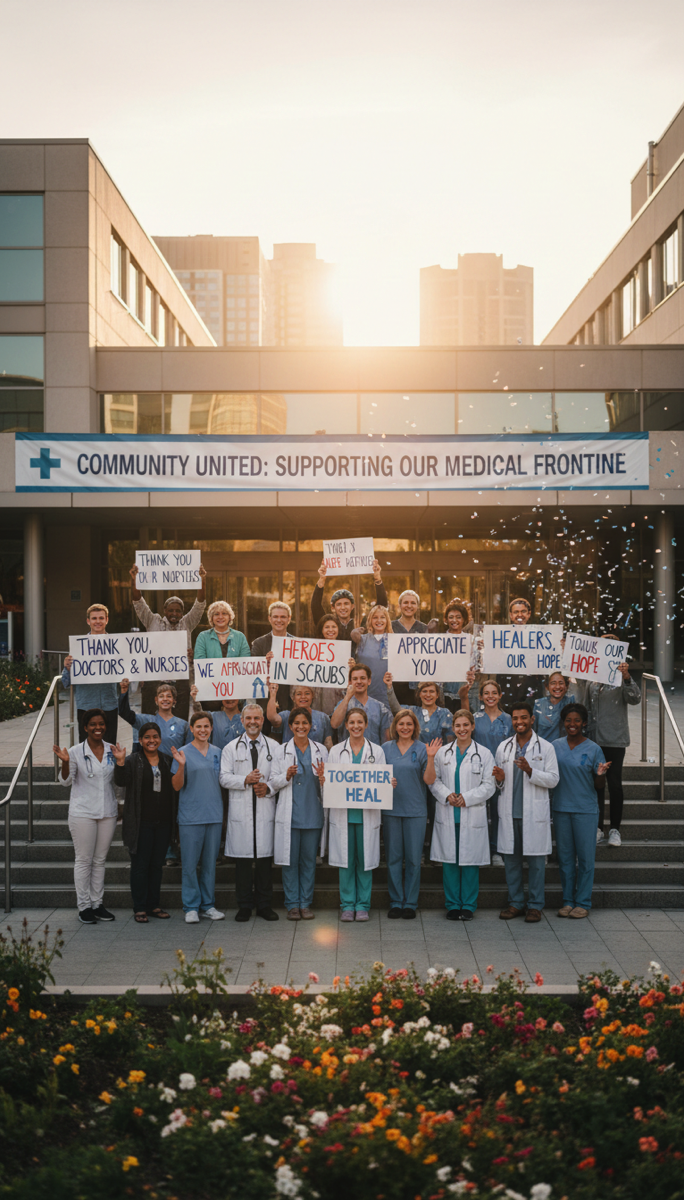
When we fall ill, we seek help from healthcare professionals and, without hesitation, entrust our most vital human assets—our health, well-being, and lives—to their care.
We do so with the reasonable expectation that those entrusted with our care will provide knowledgeable and careful healthcare of good quality, in accordance with science and established professional experience, and that we will be treated with consideration, respect, and dignity throughout the uncertainties of illness, diagnosis, and treatment.
These are not simply ideals of good medical practice; they are principles expressly reflected in Swedish law.
We do so with the reasonable expectation that those entrusted with our care will provide knowledgeable and careful healthcare of good quality, in accordance with science and established professional experience, and that we will be treated with consideration, respect, and dignity throughout the uncertainties of illness, diagnosis, and treatment.
These are not simply ideals of good medical practice; they are principles expressly reflected in Swedish law.
When it comes to cancer, the experts state that “early detection saves lives.”
Unfortunately, "early detection" only works if the doctors responsible for our care decide to act and provide prompt care and treatment for our condition.
Without treatment, the disease advances towards a more severe illness that threatens our lives.
With all the technological advances today, in the fight against cancer, time is our greatest weapon.
Prompt intervention remains our most vital safeguard; the real danger lies in medical neglect.
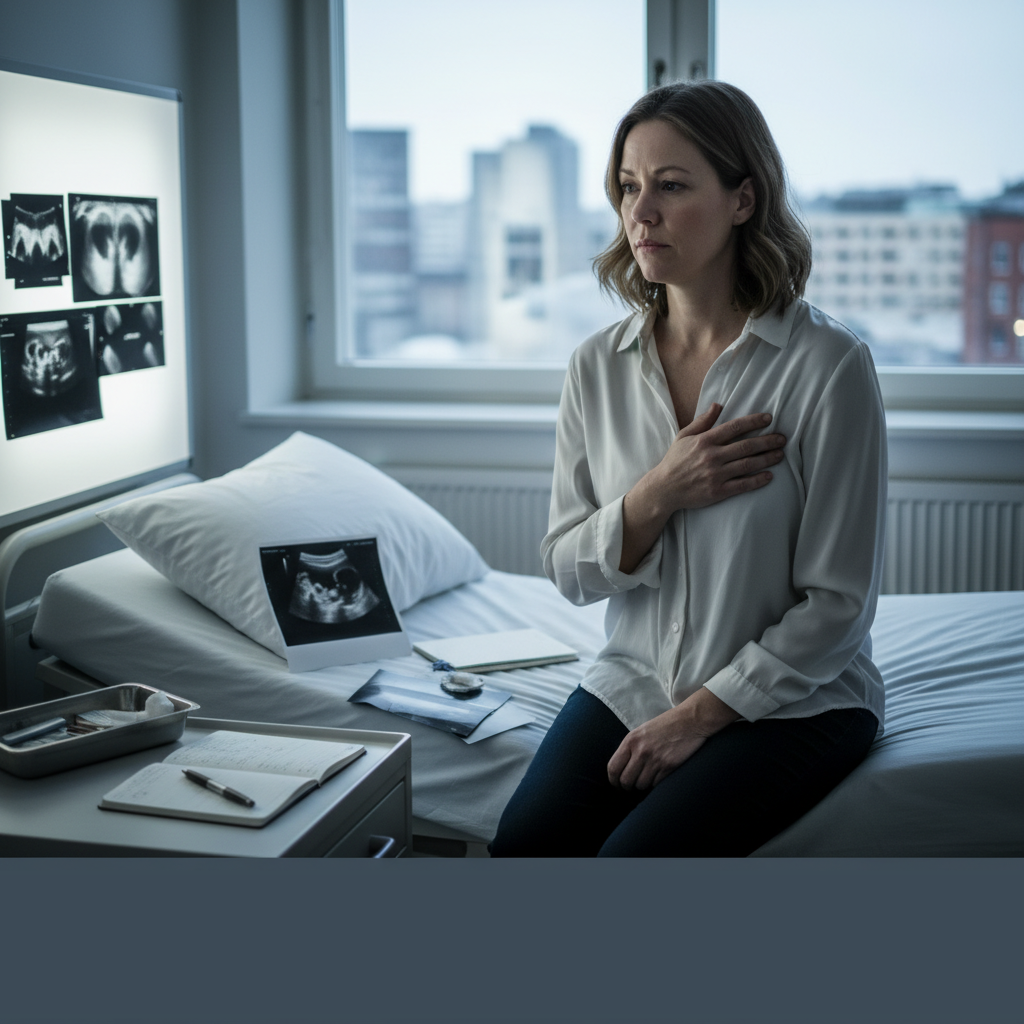
From personal experience, I know this well. I had a painful lump, and my medical records clearly indicated a family history of breast cancer and a rare chronic pseudoallergy (CARPA), yet all of these details were ignored by the same doctors who were supposed to help me.
In June 2018, I was referred to Christinakliniken for the diagnostic evaluation of a painful breast mass.
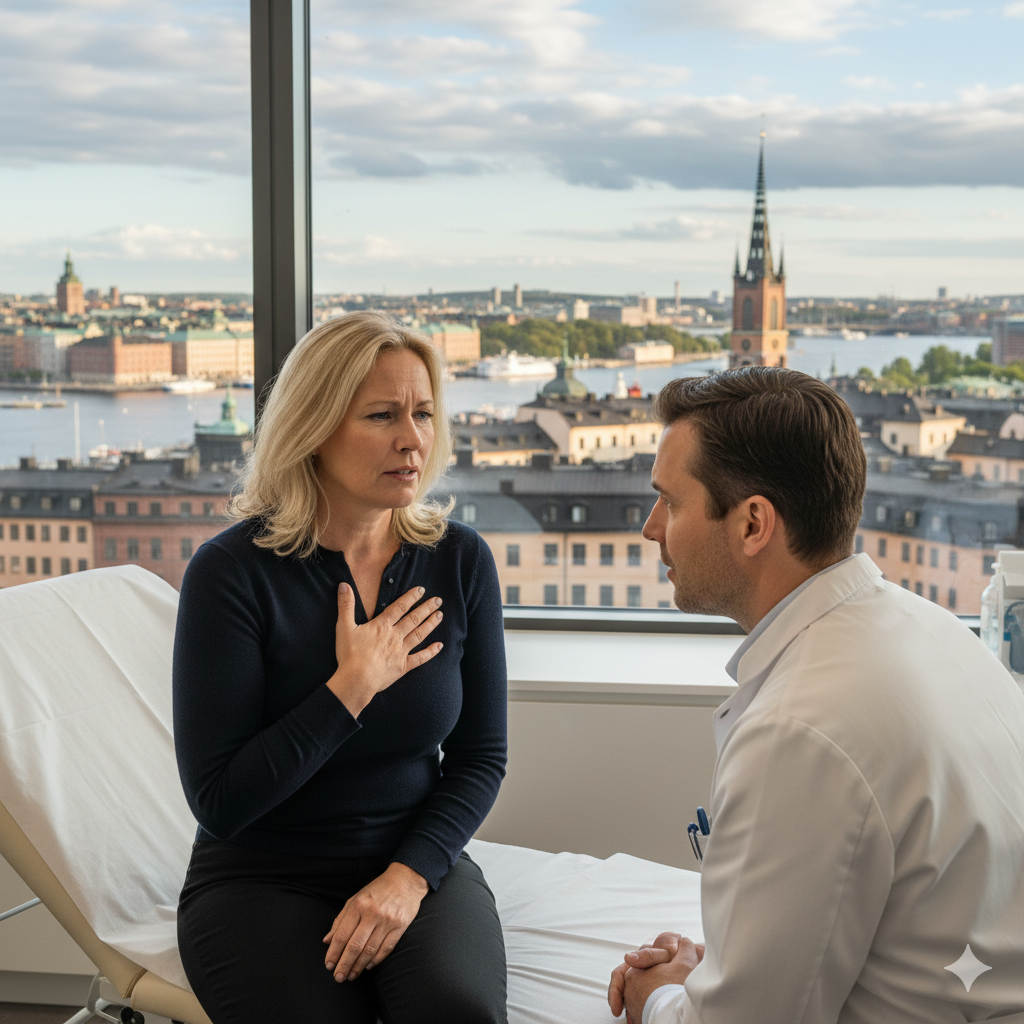
Following a series of tests, the clinic misdiagnosed the mass as benign, and despite my request for a lumpectomy, the oncologists, Dr. Eva af Trampe and Dr. Michael Szep, denied me any medical treatment, stating that intervention was unnecessary.
Instead, they promise to follow up with a reassessment within one year. Ultimately, eighteen months elapsed without Christinakliniken ever scheduling or providing the promised follow-up appointment
Following a series of tests, the clinic misdiagnosed the mass as benign, and despite my request for a lumpectomy, the oncologists, Dr. Eva af Trampe and Dr. Michael Szep, denied me any medical treatment, stating that intervention was unnecessary.
Instead, they promise to follow up with a reassessment within one year. Ultimately, eighteen months elapsed without Christinakliniken ever scheduling or providing the promised follow-up appointment
It was not until November 2019 that my general practitioner intervened and referred me for a second opinion to St Göran's Hospital.
St. Göran diagnosed my tumor as breast cancer. If my house doctor hadn't referred me for a second opinion, I wouldn't be writing this blog today.
This delay, resulting from Christinakliniken’s misdiagnosis and failure to deliver treatment and follow-up care, allowed the disease to progress to a metastatic stage.
St. Göran diagnosed my tumor as breast cancer. If my house doctor hadn't referred me for a second opinion, I wouldn't be writing this blog today.
This delay, resulting from Christinakliniken’s misdiagnosis and failure to deliver treatment and follow-up care, allowed the disease to progress to a metastatic stage.
As a result, I now live with several daily lifelong health complications from the radiotherapy, the mastectomy, and the anti-hormonal medication I have had to take daily.
A medical oversight is never just a line in a file; for me, it is a sentence I have to endure the chronic pain of a seven-year seroma and frozen shoulder, the handicapped and heavy burden of joint disfigurement, chronic insomnia, allergies, inflammation, and abdominal cramps.
Living with these lifelong complications isn't just a challenge; it’s a constant reminder of the moment my health was neglected.
What should have been a preventable medical error became a personal tragedy, profoundly and permanently altering my life
.
What should have been a preventable medical error became a personal tragedy, profoundly and permanently altering my life
.
-
misdiagnosis
-
The Erosion of Medical Trust
.
A misdiagnosis often leaves a lasting institutional scar. Patients rely on medical professionals to be the experts. When that trust is broken, especially when a patient has advocated for themselves and been dismissed, it creates a sense of profound vulnerability.
This was not a minor clinical oversight or an unfortunate delay. It was an irreversible act of negligence that escalated into malpractice—and it nearly cost me my life.
-
Emotional and Psychological Trauma
This blog is more than a personal account of my journey with breast cancer; it is a roadmap through a medical system that failed me.
A cancer diagnosis is terrifying on its own, but it becomes unbearable when compounded by the betrayal of medical neglect that changes your life forever. The "what-ifs" can be as taxing as the disease itself. Living with the knowledge that the current situation could have been prevented creates a unique form of grief.
It is not just grieving one's health, but also grieving the "alternate timeline" where the diagnosis was caught early. The shift from a "curable" to a "chronic" or "metastatic" diagnosis changes the logistics of life.
Defending the Integrity of Medicine
The strength of our medical community is measured not only by its scientific advances but also by its willingness to protect its ethical core. When medical ethics are compromised, trust erodes the foundation of the healthcare system.
Most healthcare professionals operate with integrity, competence, and dedication to their patients. However, it is important to acknowledge that they are also human and, as in all industries, some, regardless of taking the Hippocratic Oath, do not prioritize patients or have their health best interests at heart.
This is why it is in the best interests of patients and hardworking medical professionals that we all recognize the need to address failures in healthcare systems.
Those who disregard professional standards must not be allowed to diminish or overshadow the work of the many dedicated clinicians who save lives every day.
The strength of our medical community is measured not only by its scientific advances but also by its willingness to protect its ethical core. When medical ethics are compromised, trust erodes the foundation of the healthcare system.
Most healthcare professionals operate with integrity, competence, and dedication to their patients. However, it is important to acknowledge that they are also human and, as in all industries, some, regardless of taking the Hippocratic Oath, do not prioritize patients or have their health best interests at heart.
This is why it is in the best interests of patients and hardworking medical professionals that we all recognize the need to address failures in healthcare systems.
Those who disregard professional standards must not be allowed to diminish or overshadow the work of the many dedicated clinicians who save lives every day.
We must stand together in a shared responsibility: to ensure that the promise to “Do No Harm” is not reduced to an ancient oath, but upheld as a living, daily commitment to every patient—without exception and without compromise.
Protecting the integrity of medicine means protecting the promise of healing itself.
Acknowledging this reality, even if it is uncomfortable, empowers us to take an active role in our care.
By doing so, we shift from being passive recipients to engaged participants in our own health journeys.
Protecting the integrity of medicine means protecting the promise of healing itself.
Acknowledging this reality, even if it is uncomfortable, empowers us to take an active role in our care.
By doing so, we shift from being passive recipients to engaged participants in our own health journeys.
-
Grief over lost health, body mutilation, anger at the unfairness of it all, and the gradual acceptance that life has changed forever.
-
Confronting the physical challenges of a rare condition.
Enduring treatments, facing the unpredictability of symptoms, and coping with the limitations of a body in distress become a daily battle. -
Cancer Research
The journey begins with a sudden and unexpected diagnosis. Life takes an abrupt turn as I grapple with the reality of illness. Questions arise, and fear sets in. The once-familiar path becomes a winding road of uncertainty. -
C.A.R.P.A
A new illness has a way of reshuffling life's priorities—reflections on what truly matters. Relationships, personal passions, staying productive, and pursuing a better quality of life take on a renewed significance. The journey becomes about survival and living a meaningful life despite the challenges.
Worldshare.se offers a collection of information, drawn from personal experiences and in-depth research from various professional sources, on cancer, with a particular focus on breast cancer. It’s essential to understand that while this content aims to show my story, inform, and support, it is not meant to serve as medical advice.